Regi Pearce's Nuts & Twigs: The Cuban Table She Grew Up On, Made Vegan

Regi Pearce, the Miami-born recipe developer and home cook behind the vegan Cuban recipes of Nuts & Twigs. Photo courtesy of nutsandtwigs.com
Nuts & Twigs The Cuban Miami table of a vegan's childhood, cooked back one family dish at a time nutsandtwigs.com

Regi Pearce was "born and raised in Miami, Florida by Cuban parents, where dinner was picadillo and black beans and something fried." In that house, announcing that you were skipping the meat would have been treated as a medical emergency. Then, on her honeymoon about thirty years ago, she and her new husband pulled over on a road in California. "I found myself face-to-face with a cow." She told him she was done eating animals, and she meant it.
Nuts & Twigs is where those two facts meet. The name comes from a joke about what vegans supposedly eat, and her answer to it is the whole site: she eats "everything you eat," from burritos and curries to cookies and BBQ, "just the plant version." She calls herself the "head nut, chief twig, and creator," her husband Rob keeps the site running, and the stated goal is "effortless, elevated everyday food that just happens to be vegan." There are hundreds of recipes on nutsandtwigs.com, all of them free. The ones that carry the most weight are the Cuban dishes she grew up on.
What Was Always Vegan
Pearce's Latin and Spanish section now runs past forty recipes, and since July 2026 it has turned into something close to a family album: boniatillo, camarones enchilados, crema de vie, pudín de pan, arroz con pollo, mariquitas, maduros, tostones and yuca con mojo, one after another. What makes the run worth reading is how honestly she sorts it. Some of these dishes need a stand-in. Her mother made arroz con pollo "at least once every couple of weeks," and young Regi picked around the chicken for the rice and peas; the vegan version browns shredded plant-based chicken and lists tofu, soy curls, white beans or jackfruit as alternatives. The crema de vie her family kept "in the door of the refrigerator from about the second week of December" gets its custard body from soaked cashews instead of eggs.
Other dishes needed nothing at all, and she says so. Yuca con mojo was "part of every Nochebuena table" in her family, and her version uses olive oil, which "is just as traditional and is how many Cuban families make it, so this version is naturally plant-based with nothing lost." She adds a practical warning that only an insider would think to give: some cooks use lard or scatter chicharrones on top, so ask when you are eating at someone else's table. The same goes for her moros y cristianos, where traditional recipes "often call for a small amount of lard in the sofrito." Read together, the posts quietly argue that a Cuban Christmas Eve was closer to vegan than anyone at the table realised.
That instinct for recording a cuisine from the inside runs through this series. Annick Mégie records Haitian cooking from the source on Tchakayiti, and Laylita's Recipes turned phone calls home into Ecuador's recipe archive. Pearce does it from a Miami kitchen, with the meat taken out and the memory left in.
Two Pieces Worth Exploring
Vegan Camarones Enchilados (Cuban Shrimp Creole)
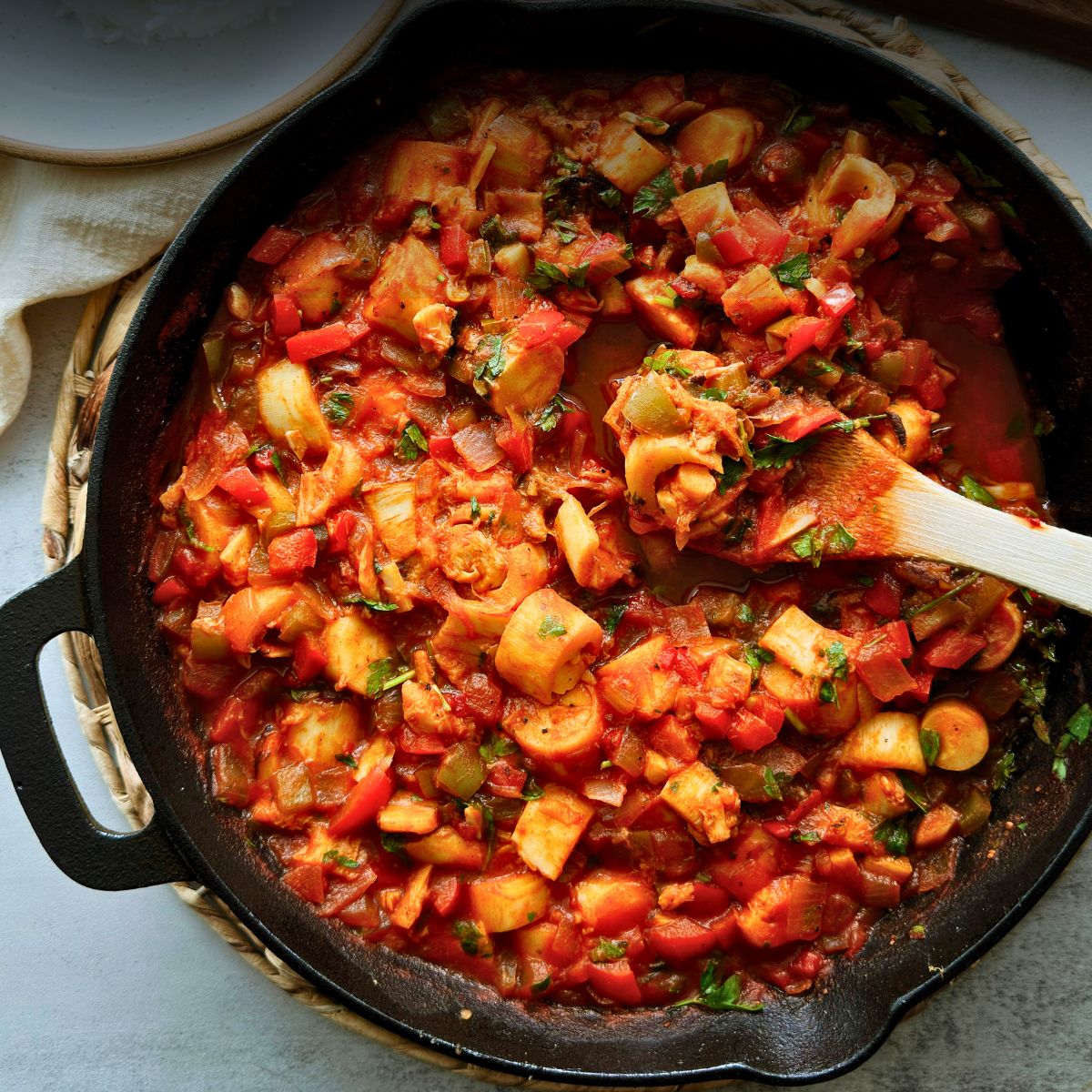
Vegan Camarones Enchilados Her mother's shrimp creole, rebuilt around the part she always loved nutsandtwigs.com
"My mom made camarones enchilados all the time, and I was never really in it for the shrimp. I was in it for the sauce." That line is the key to how Pearce adapts a dish: find what the dish is actually about, and protect it. Here the shrimp becomes golden-seared hearts of palm, with an optional soak in kombu or nori brine that gives "a clean oceanic note that reads as seafood without tasting like a sushi roll." The post explains that enchilado simply means "in chili sauce," that this is a tomato and sofrito sauce rather than anything Mexican, and that "Cuban cooking leans aromatic rather than hot." The technique notes are the kind that come from cooking it often: "Dry is everything when browning the hearts of palm," and don't crowd the pan. Serve it with white rice and Cuban bread, because, as she puts it, "the sauce deserves to be mopped up."
Boniatillo Seco (Cuban Sweet Potato Candy)
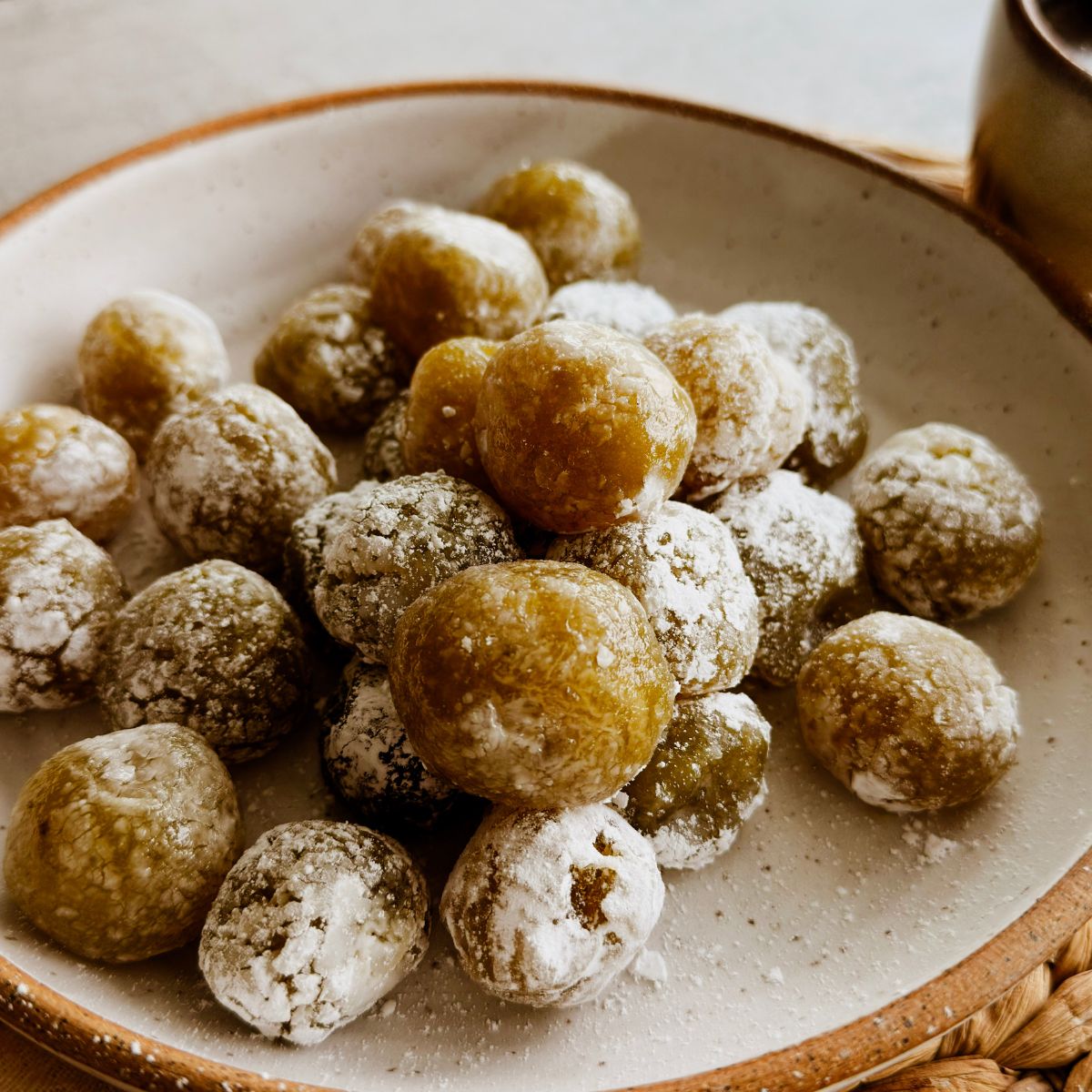
Boniatillo Seco A Cuban street sweet, two generations deep nutsandtwigs.com
Pearce grew up eating boniatillo seco bought at Sedano's, a Cuban grocery store in Miami. When she brought it up with her mother, her mother "immediately remembered buying it from street vendors as a little girl in Cuba," where getting one was a special treat. The recipe is naturally vegan, "no egg yolks, no dairy," so the work here is in the technique, and she is precise about it. Boniato, a sweet potato with pale, dry flesh, is "noticeably starchier and less watery than the orange sweet potatoes" in most American supermarkets, and that dryness is what lets the candy set. Seco means dry: the paste is cooked past the pudding stage until it pulls cleanly from the pan, and her test is to push it into a mound and see whether it holds. It is a short post about a small sweet, and it carries a mother's childhood with it.
Why It Matters
Vegan versions of heritage food usually arrive from outside the culture, as substitutions bolted onto a dish someone else grew up with. Nuts & Twigs works the other way. Pearce knows which dishes were always plant-based and says so, knows where the lard hides, and knows what the dish is really for, whether that is the sauce on the camarones or the thimbleful of crema de vie the kids got in December. Much as Melissa Thompson reads Jamaican history through what lands on the plate, Pearce's recipes are a record of a Cuban Miami household, written down by the daughter who stopped eating half of it.
For a home cook, that makes the site unusually useful. If you are vegan and miss the food you grew up on, she shows you how much of it you never had to give up. If you cook for a vegan at Nochebuena, she shows you which dishes to leave exactly as they are. And she is still adding to the table: in their family, boniatillo con coco comes out "after a long traditional dinner when nobody has room," and "everybody eats it anyway." Regi Pearce has made sure the vegans at the table get a bowl too.
Explore Nuts & Twigs: https://nutsandtwigs.com
We're featuring exceptional food blogs that bring unique perspectives to cooking and culture. At ChefTalk, we're building a voice-first cooking companion that transforms any recipe into hands-free guidance, action by action. Learn more.