Annick Mégie's Tchakayiti: Haitian Cuisine, Recorded from the Source

Annick Mégie of Tchakayiti, a bilingual Haitian food blog preserving Port-au-Prince cuisine, pikliz, mortar and pestle traditions, and Caribbean home cooking from inside Haiti
Tchakayiti
A bilingual Haitian food blog written from Port-au-Prince, preserving the aromas, anecdotes, and recipes of a cuisine rarely documented in its own voice.
tchakayiti.com
Most English-language Haitian food writing comes from the diaspora. The writers are children or grandchildren of immigrants, cooking from memory in kitchens in Brooklyn or Montreal or South Florida, reconstructing the food their mothers carried out of the country. Annick Mégie is the rare exception. She writes Tchakayiti from inside Haiti itself, from her mother's office desk in the hills of Port-au-Prince, with the orchard her family planted just outside the door.
Mégie was born and raised in Haiti and still lives there. Her childhood was spent hiking with her father in the hills above the capital, gardening in her family's yard, and watching the household cook prepare the day's meals. The yard has since grown into a real orchard whose fruit shows up regularly on the blog. She works professionally in advertising and brings a designer's eye to her food photography, but the writing is what sets the project apart. In 2019 Tchakayiti was a finalist for Saveur's Best Food Culture Blog award, one of six selected from across the food blogging world.
The blog has been running since 2014, written in parallel English and French, and over more than a decade it has become a quiet archive of Haitian gastronomy. Recipes sit alongside cultural essays, photographs of fruit from her trees, and reflections on the tools and techniques that built the cuisine. The stated goal is to "share a digital gastronomic directory of the Haitian cuisine that goes beyond simple Haitian food recipes gathered here and there." After eleven years, that directory is one of the most personal and literary in the Caribbean food space.
A Cuisine Cooked from the Heart
Mégie opens her about page with a warning to readers: if you do not find accurate proportions on her recipes, please do not hold it against her. Haitian cooking, she explains, rarely operates with well-defined measurements. Haitians cook with their hearts and, more importantly, their taste buds. That single line tells you what Tchakayiti is. It is not a recipe-development site. It is a record of how a cuisine actually works, written by someone who learned it the way Haitians learn it, by watching, tasting, and remembering.
The blog moves between two modes. The recipe posts are practical: how to make pikliz, how to fry bannann peze, how to build the layered epis that flavors almost everything. The story posts are where the writing earns its Saveur recognition. A piece on labapin, the Caribbean chestnut, becomes a meditation on imported nostalgia. A post on avocado turns into a portrait of her father trying to secure a slice for himself at a six-person family table. A reflection on the wooden mortar and pestle, published just weeks ago, asks whether Haitian cooks will let a tool that "carried the symphony of our cuisine" disappear into the cupboard.
This kind of writing has parallels in our spotlight series. Like Maria Kalenska, who documents Odesan cuisine from her home city, Mégie writes from the country whose food she is recording, and that proximity changes the texture of the writing. The cuisine is not being reconstructed from a notebook. It is being noticed, day by day, in the place where it lives.
Two Posts Worth Exploring
A Can of Cheese and Haitian Pikliz
 annick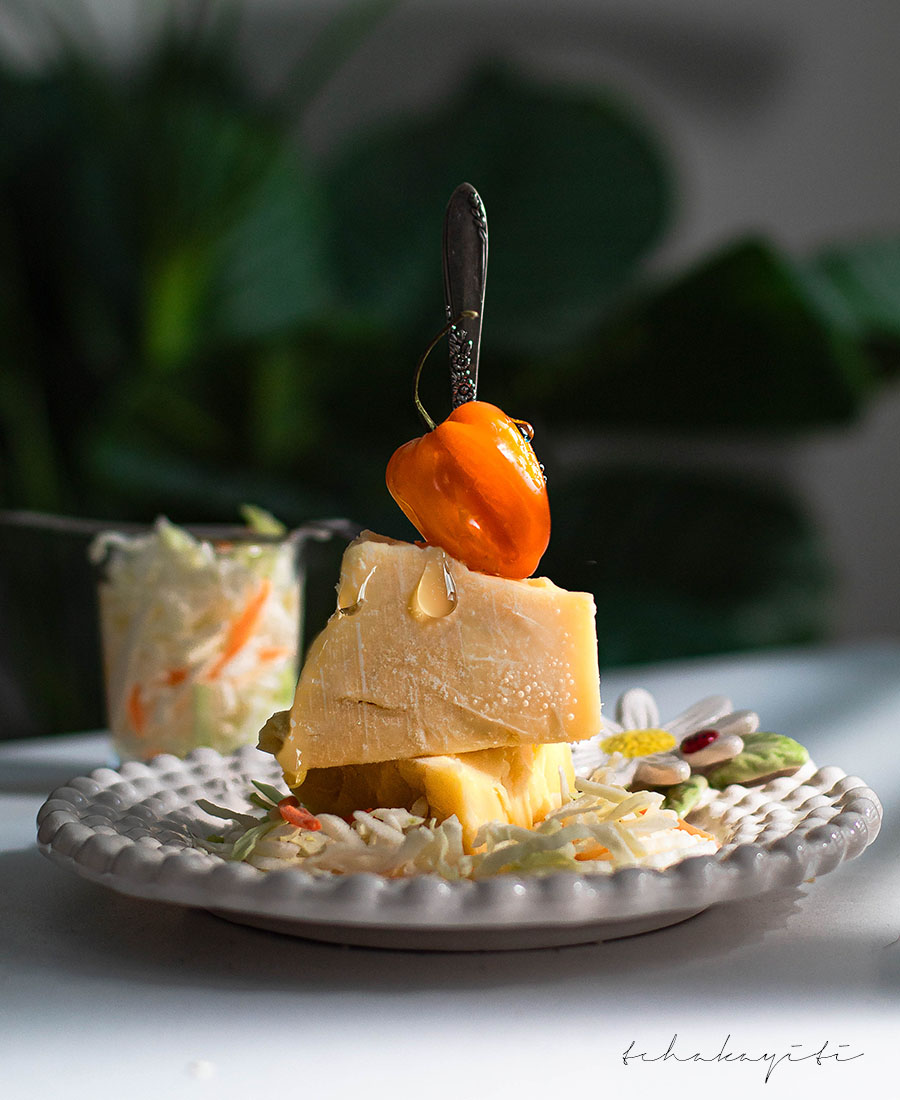
A Can of Cheese and Pikliz
A memoir of the 1994 embargo, told through one condiment and a can of cheese from Holland.
tchakayiti.com
This is Tchakayiti at its best. Mégie remembers being seven or eight during Haiti's 1994 embargo, when food rations arrived in golden cans and a block of cheese from Holland was extracted with a kitchen paring knife. The cheese, nicknamed fromage sinistré or "survivor's cheese," was eaten in chunks with the family's cabbage and carrot pikliz, the vinegared chili condiment that has become Haiti's most internationally recognized food item. The piece then jumps forward to her high school cafeteria, where Laughing Cow cheese sandwiches got the same pikliz treatment on the playground. Three eras of personal and political history, told through one condiment. The post also doubles as an invitation to the foundational recipe: her traditional Haitian pikliz, originally published in 2014 and still her most-referenced post.
Second Ode to the Mortar and Pestle
 annick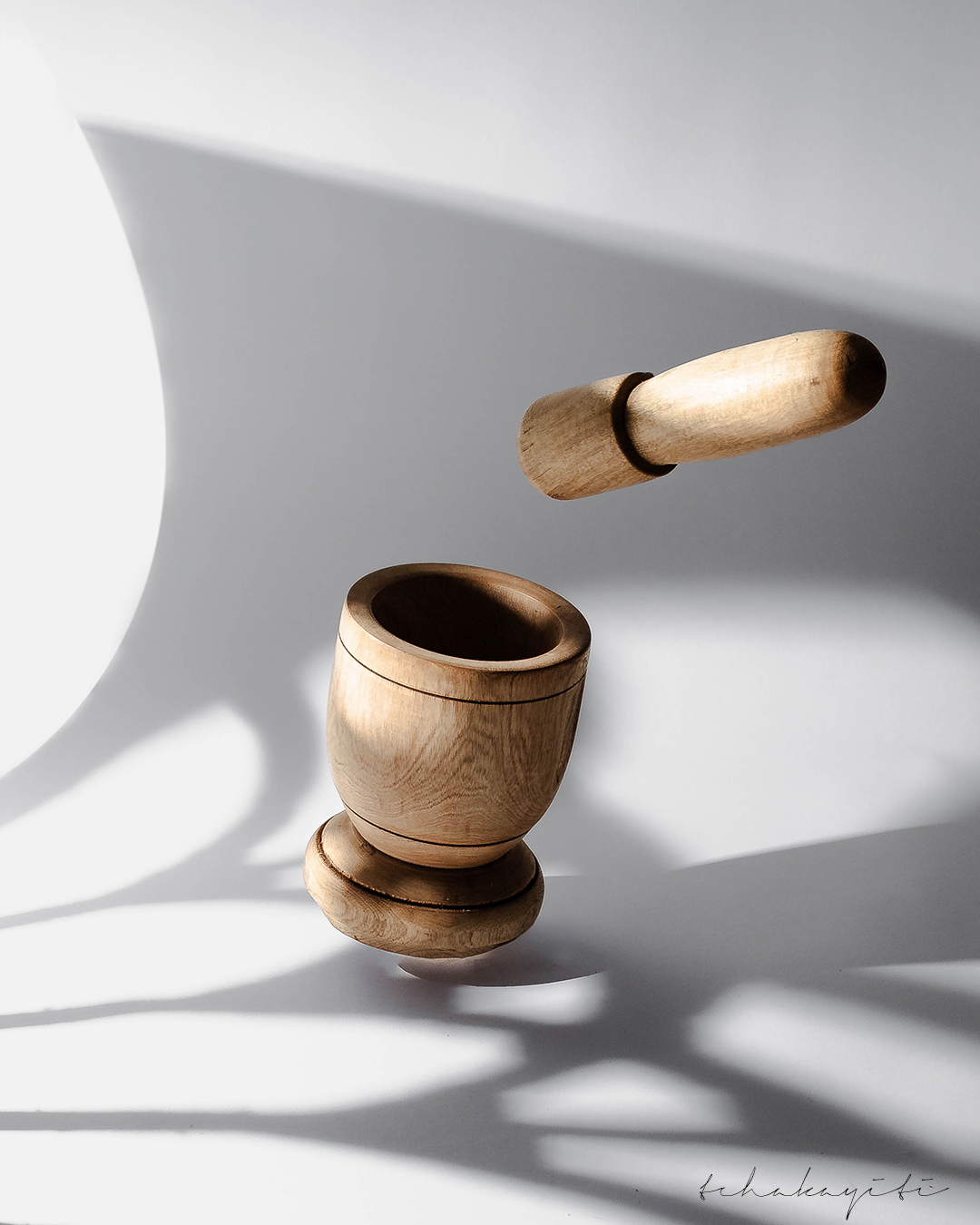
Second Ode to the Mortar and Pestle
A meditation on the disappearing wooden pestle, the heartbeat of Haitian home cooking.
tchakayiti.com
Published in April 2026, this is the post that captures the whole project. Mégie writes about the wooden pilon that pounded epis, sòs pwa, soup joumou, and roasted coffee beans throughout her childhood, and asks what becomes of it now that the food processor has won. Her grandmother's generation knew the mortar as the maestro of the kitchen. Her generation is letting it slip into the cupboard. The piece does not moralize. It listens. "Each pounding of the pestle reveals a little of our history, our traditions, our know-how," she writes, "a rhythm that keeps Haitian gastronomy alive." It is the kind of essay that explains why a food blog can be a record-keeper as much as a recipe source.
Why It Matters
Haitian food is having a real moment in the English-speaking culinary world. Datassential and National Geographic both flagged Haitian cuisine as one of 2026's most important food trends, and pikliz, the very condiment Mégie has been documenting since 2014, is one of the breakout items being predicted to land on American restaurant menus this year. The interest is real. The English-language home-cooking content to meet it remains thin.
That gap is what Tchakayiti has been quietly filling for more than a decade. Like Heifa Odeh's work at Fufu's Kitchen and Maryam Jillani's Saveur-winning archive at Pakistan Eats, it documents a national cuisine that has been under-served by the food blogging world. The difference is that Mégie is writing from home, in the language her family speaks at the table, with the orchard outside her window providing the ingredients.
When Haitian cuisine finally gets the English-language attention it deserves, this is the archive that will have been waiting.
Explore Tchakayiti: https://tchakayiti.com
We're featuring exceptional food blogs that bring unique perspectives to cooking and culture. At ChefTalk, we're building a voice-first cooking companion that transforms any recipe into hands-free, step-by-step guidance.
Learn more.