Carolyn Ekins's 1940s Experiment: 244 Recipes From the Ration Book
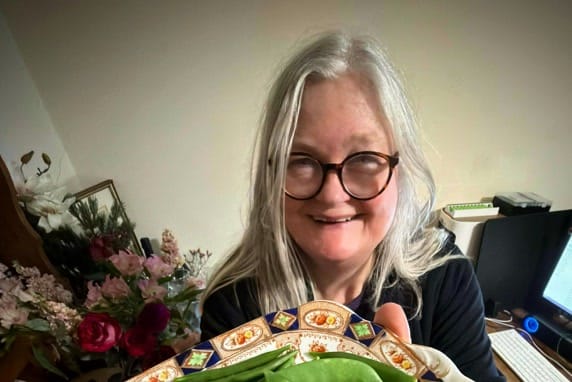
Carolyn Ekins of The 1940s Experiment, who has been re-creating Britain's wartime ration recipes since 2009. Photo courtesy of the1940sexperiment.com
The 1940s Experiment Britain's wartime ration book, cooked one numbered recipe at a time in a real kitchen since 2009 the1940sexperiment.com
 Carolyn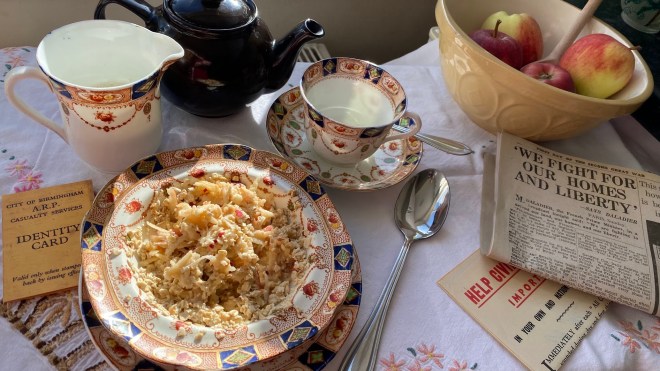
One fresh egg a week. Two ounces of cheese, two of butter, four of bacon and ham. That is the weekly adult ration Carolyn Ekins sets out on her blog, and to her it is less a historical curiosity than a shopping list. She has gone back to living on it again and again, sometimes for months at a stretch, cooking the recipes that Ministry of Food leaflets, flour-company booklets and wartime magazines handed to British households, and photographing every one. Then she numbers them. The most recent is Recipe No. 244.
The 1940s Experiment began in August 2009 as a personal project. Ekins had lived on full wartime rations for four months three years earlier and wanted to go back to it, and she started a blog to keep the record. It became something larger: a running account of what the ration book actually produces when an ordinary person, on an ordinary budget, cooks from it in an ordinary kitchen. Rationing in Britain began on 8 January 1940, a date she points out on her site is also her birthday. She has taken the coincidence more seriously than most people would.
Living It, Not Writing About It
Plenty of people collect wartime recipes. What sets this blog apart is that the recipes are tested against the constraint they were written for. When she posts Glamorgan sausages, readers write in to say nobody would have spent that much cheese in wartime, and she answers with the arithmetic: a family of four had four ration books between them, and a vegetarian who gave up the meat ration got extra cheese in its place. When she lives on the ration now, she prices it. In March 2026 she published what that comes to, well under £20 a week, shopping mostly at Aldi, with a free printable of the weekly standard ration for anyone who wants to try.
Her own reason for all of this is not nostalgia but usefulness. "I remain passionate about getting by on less and how living simply can help us through challenging times," she writes. She wants the recipes to "offer comfort and hope to people who struggle," and to celebrate "the ingenuity and strength of families and of mothers who held the home front together." She has put the source material where anyone can reach it, too: a free archive of original wartime leaflets and cookery booklets, from the Ministry of Food's numbered leaflets on oatmeal, potatoes and dried eggs to the Stork Cookery Service notes.
It is the same stubbornness that keeps Jenny Hammerton cooking through a film-star archive nobody else kept, and a cousin of the way Marissa Nicosia reads a manuscript by cooking it. The difference is that Ekins's archive is a lived one. The test of a wartime recipe, for her, is whether you could feed a household on it this week.
Two Pieces Worth Exploring
 Carolyn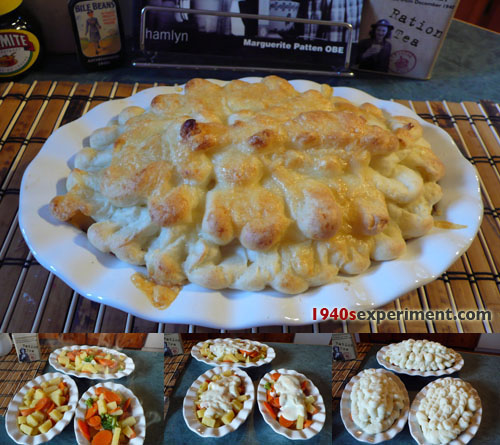
Lord Woolton Pie Recipe 24, the defining dish of the home front, made Savoy style in the blog's first autumn the1940sexperiment.com
Woolton pie is the dish everyone names when rationing comes up. It was created at the Savoy by its head chef, François Latry, publicised in The Times in April 1941, and named for Lord Woolton, the Minister of Food who promoted it: root vegetables under a crust, and no meat anywhere. Ekins made it in November 2009 as Recipe 24, the "Savoy Hotel" way, with a herb white sauce over the vegetables and mashed potato piped on top through "a baggy with a hole in." The detail that gives the blog away is in the method, where she tells you to save the potato peelings and bake them with salt and herbs. That is the ration book's whole philosophy in a parenthesis, and it was there in the blog's first months.
Baked Mince Pudding, Recipe No. 240
 Carolyn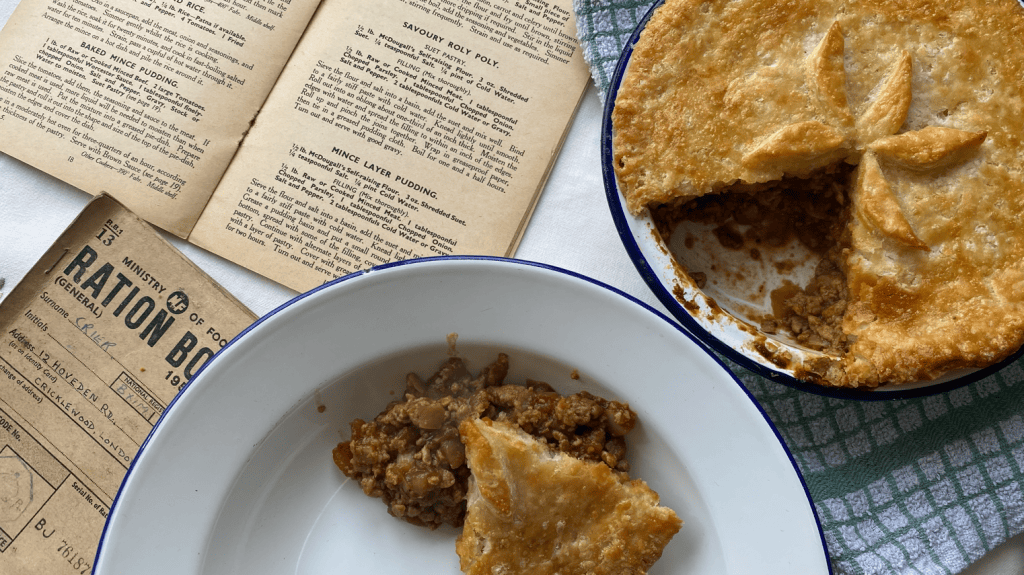
Baked Mince Pudding Recipe 240, suet pastry over mince or lentils, and a verdict from someone who ate the original the1940sexperiment.com
Two hundred and sixteen recipes later, the method has not changed but the table has. Baked Mince Pudding is mince, tomato and onion under a suet crust, and Ekins gives it both ways: beef from the ration, or lentils and plant-based mince with vegan suet, which she says made a wonderful pastry. Her father, born a year and a half before the war began, has been eating her wartime cooking for weeks without being told where it comes from. His view of the whole project: "I hope your book is a success but why would people want to eat wartime food again, it was horrible!" She laughed, and admits he is right in many respects. Then she explains why she does it anyway: nostalgia, curiosity, and wanting "to keep a bit of history alive for future generations."
Why It Matters
Most writing about wartime food looks at rationing from a safe distance, as a grey stretch of austerity that ended in 1954. The 1940s Experiment closes the distance. It treats the ration book as a working system, one that can still feed a person on very little money, and it tests that claim the only way it can be tested: in a real kitchen, week after week, with the prices published. Maria Kalenska founded Bake for Ukraine to answer wartime food shortages that are happening now. Ekins shows what an older war's recipes can still teach a cost-of-living crisis eighty years on.
In 2012 a New York publisher read about her in The Awl and asked whether she had ever thought about writing a book. It took fourteen years, but on 1 January 2026 she left her marketing career to do exactly that, and her site now announces a self-published collection of her re-created ration recipes for October. Two hundred and forty-four recipes in, she is still doing it the way she started: one dish at a time, numbered, with the peelings saved.
Explore The 1940s Experiment: https://the1940sexperiment.com
We're featuring exceptional food blogs that bring unique perspectives to cooking and culture. At ChefTalk, we're building a voice-first cooking companion that transforms any recipe into hands-free, step-by-step guidance. Learn more.