Marissa Nicosia's Cooking in the Archives: The Recipes You Have to Cook to Read
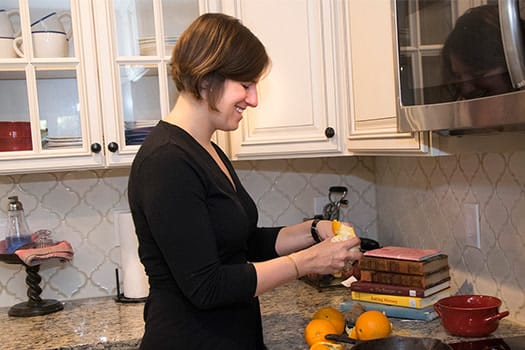
Marissa Nicosia of Cooking in the Archives, who cooks manuscript recipes from 1600 to 1800. Photo by Marty Moore, courtesy of psu.edu
Cooking in the Archives Handwritten recipes from 1600 to 1800, cooked in a real kitchen and reported honestly rarecooking.com
 Marissa Nicosia
There is a moment in every historical recipe where the instruction stops helping. Peel the mushrooms, it says, and you are left holding a mushroom, wondering whether the person who wrote that in 1690 meant what you think they meant, and whether it matters. You can read around the problem for a long time. Marissa Nicosia's answer is to go and peel the mushrooms.
Nicosia is Associate Professor of Renaissance Literature at Penn State Abington, and since June 2014 she has been running Cooking in the Archives, a project she describes as finding, cooking and discussing recipes from cookbooks produced between 1500 and 1800. It began with paleography, the study of historical handwriting, which is the least appetising possible origin for a food blog and also the reason this one is different from every other. She started with documents nobody could read, and the way she chose to read them was to cook them.
The project was founded with Alyssa Connell on a fellowship at the University of Pennsylvania, and Nicosia has been its lead writer since 2017. Eleven years on, the method has not drifted.
Cooking as a Research Method
The thing to understand about Cooking in the Archives is that the cooking is not the fun part at the end of the research. It is the research. "I need to use my embodied method, my practice as research method, to fully understand what it's saying," Nicosia has said of working with these texts, and on the mushrooms specifically: "I don't exactly understand what the difference between peeling or not peeling the mushrooms are until I've tried it."
That commitment comes with a refusal attached, and the refusal is the best thing about the site. "I begin from a position that what I make will not be authentic, but it will be in a open dialogue with that original recipe." No claim to have recreated the past, no costume, no pretence that a modern oven and a supermarket peach can be argued back into 1629. What she offers instead is a conversation between a document and a kitchen, conducted in public, with the failures left in. It is a more modest promise than the genre usually makes and it is the only one anybody can actually keep. Farrell Monaco works the same seam from the archaeological side, rebuilding Roman bread from the evidence rather than from the legend, and Jenny Hammerton does it with a twentieth-century archive nobody thought to keep.
Every post runs the same three movements. The manuscript first, named and located, so you know whose kitchen this came out of. Then the original recipe, photographed and transcribed, with brackets where the hand defeats her. Then her version, with grams and temperatures and a plain account of how it went. She has never worked systematically through a single book. "The process always begins with me reading something and saying, ooh, that's interesting," which is how a person stays interested in one thing for eleven years.
Two Pieces Worth Exploring
To Make Jaculat (Chocolate) Milk
 Marissa Nicosia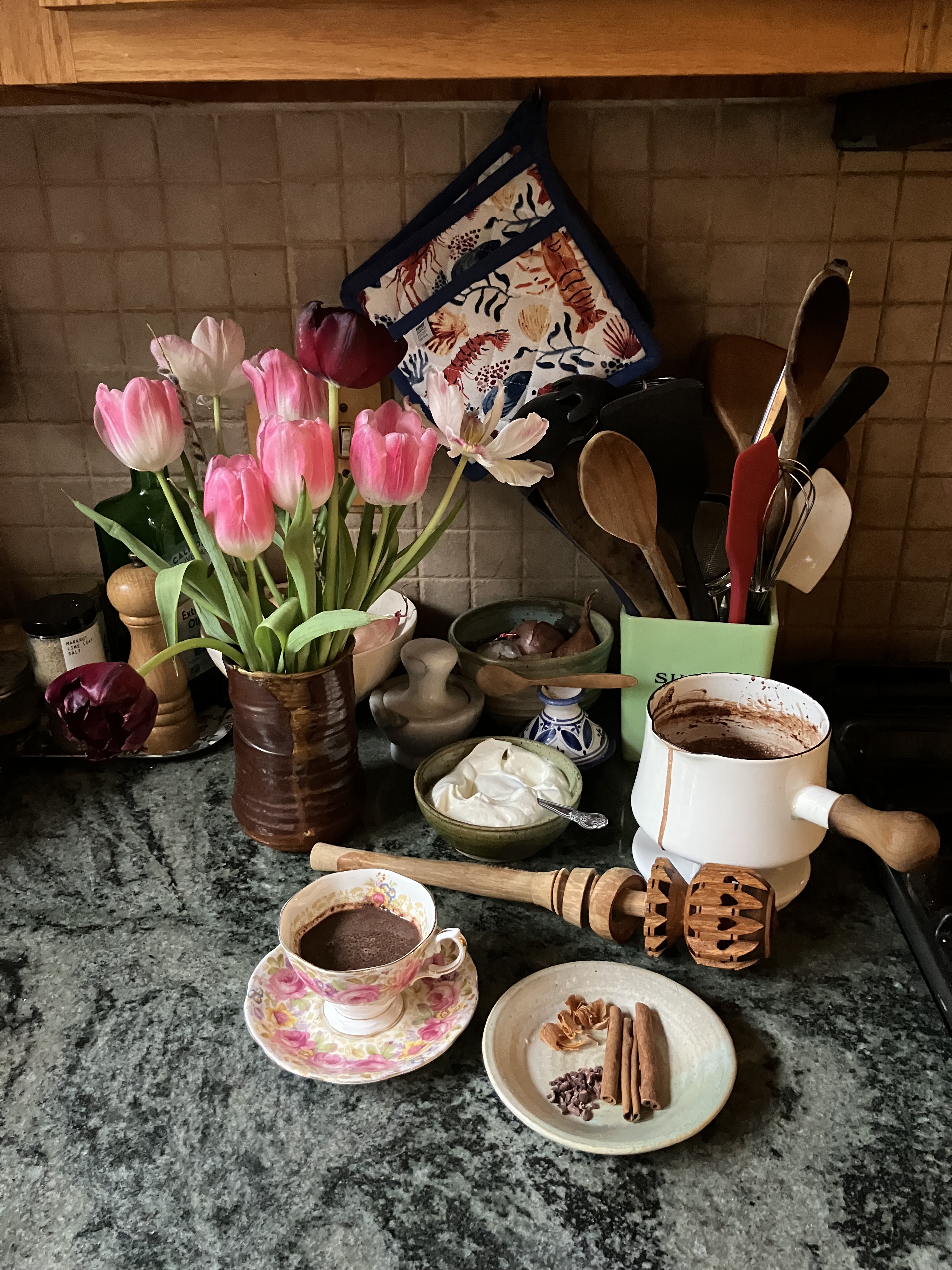
To Make Jaculat A Scottish household in 1707 owned a chocolate whisk, and knew exactly what to do with it rarecooking.com
The recipe comes from Mistress Anna Campbell her Paistrie Booke, 1707, a manuscript in Penn State's Eberly Family Special Collections. Boil sweet cream with cinnamon, mace and sugar, grate in chocolate until it is as thick as you want it, then take it off the heat and whisk it with a chocolate stick until it froths. That chocolate stick is the whole post. A molinillo in a Scottish kitchen in 1707 means the tool and the technique travelled out of the Americas with the bean itself, through Spain, into Britain, and ended up in the hands of a woman writing down her household's recipes. No printed cookbook tells you that. A manuscript does, simply by assuming you already own one.
 Marissa Nicosia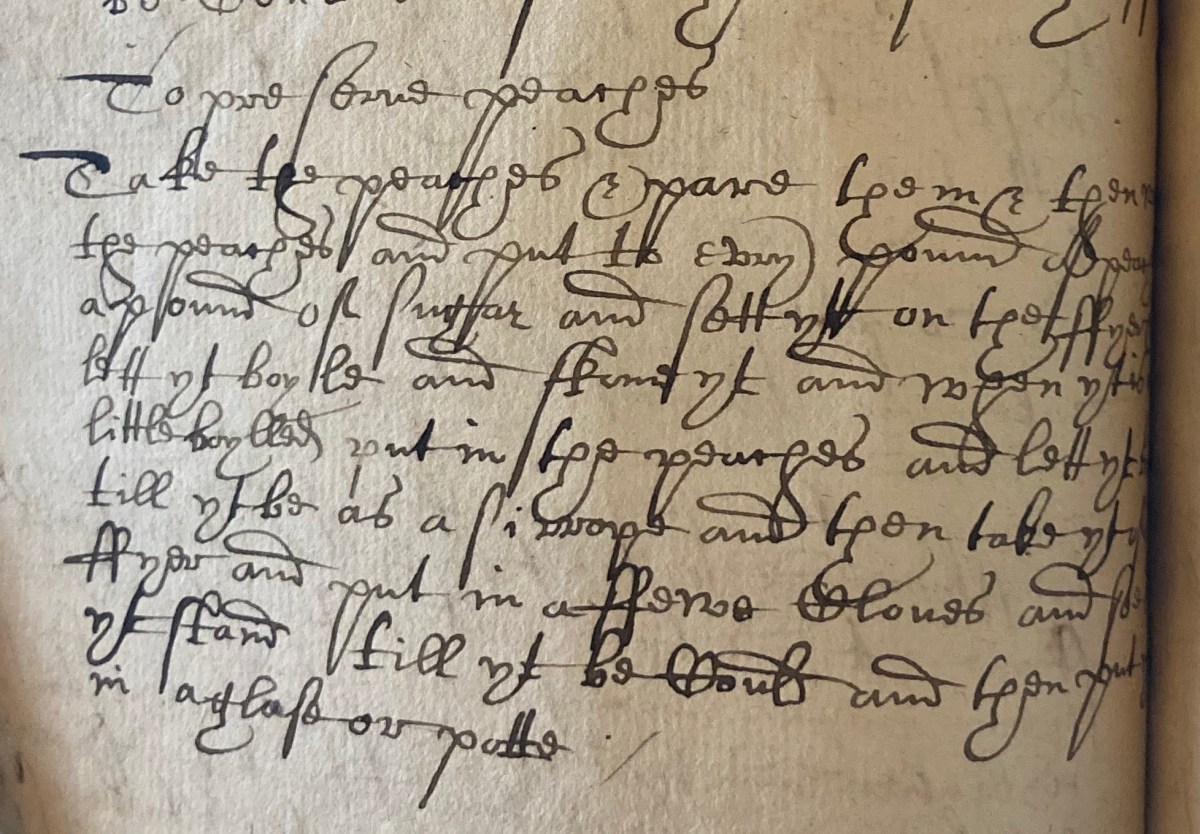
To Preserve Peaches An equal weight of fruit and sugar, three cloves, and an honest account of what went slightly wrong rarecooking.com
From Bodleian MS Rawl. C.81, a 1629 collection belonging to Dorothy Hudson, in which preserves sit alongside medical receipts because in 1629 those were the same kind of knowledge. The original tells you to weigh the peeled fruit and match it in sugar, boil to a syrup, add the peaches, finish with cloves. Nicosia gives you 175 grams of each, three cloves, 210F for the syrup and 240F for a set, and ten minutes on the heat. Then she tells you the preserve came out slightly amber and that next time she would cut the fruit smaller and cook it less. The cloves, she reports, are excellent with peaches. "I'm glad I've captured this tiny bit of August sunshine in a jar."
Why It Matters
Most historical food writing asks you to be impressed. Cooking in the Archives asks you to make the jam. The difference matters because early modern recipe manuscripts are among the very few surviving documents in which ordinary women wrote down what they knew, in their own hands, for their own households, and the usual fate of such a document is to be catalogued and left alone. Cooking one is a way of taking it seriously that no amount of citation quite matches. It is the same instinct that drove Maryam Jillani to build the Pakistani reference work that should already have existed, applied backwards through four centuries.
Nicosia has taken the method into her scholarship as well. Her Shakespeare in the Kitchen, published by Routledge in 2026, reads the plays through the food in them and hands you updated recipes to cook alongside the analysis, which is either a very strange way to write a book about Shakespeare or the obvious one. Either way it comes from the same place as the blog: a suspicion that there are things in a text you will only find out by standing at a stove. She has been testing that suspicion in public for eleven years, one manuscript at a time, and she still tells you when the peaches go amber.
Explore Cooking in the Archives: https://rarecooking.com
We're featuring exceptional food blogs that bring unique perspectives to cooking and culture. At ChefTalk, we're building a voice-first cooking companion that transforms any recipe into hands-free, step-by-step guidance. Learn more.