Polina Chesnakova's Chesnok: Where Every Clove Tells a Diaspora Story
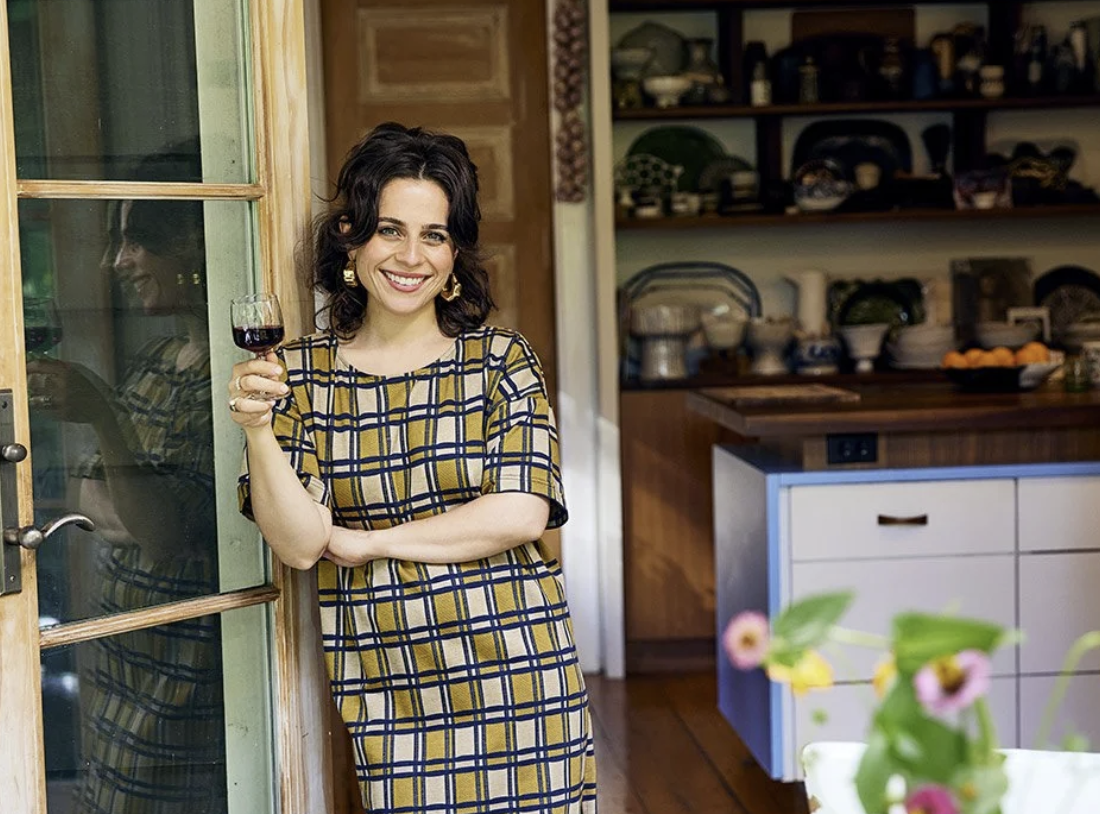


Chesnok Georgian and Eastern European home cooking from the Soviet diaspora, told through family recipes and immigrant stories polinachesnakova.com
Chesnok is the Russian word for garlic. It is also the root of Polina Chesnakova's last name, and for the past decade, it has been the name of her blog, her newsletter, and now her third cookbook. The connection is not accidental. Garlic is the ingredient that binds Georgian cooking together, the thing you smell first when you walk into a kitchen where someone is making pkhali or lobio or khinkali. For Chesnakova, the name holds a deeper meaning: the way different cloves fit together inside a single head mirrors how the cuisines of her family's scattered heritage come together at one table.
Chesnakova was born in Ukraine in 1992 to a Russian mother and an Armenian father, both raised in Tbilisi, Georgia. The Soviet Union was collapsing. Her parents saw the writing on the wall, secured their documents, and carried their newborn daughter to Rhode Island, where they joined a growing community of refugees from across the former Soviet Union. Four of her mother's sisters followed. The kitchens of those women became Chesnakova's culinary education. While the neighborhood offered Oscar Mayer sandwiches and Capri Suns, the family table held olivye salat, shashlik, and khachapuri. Those dishes became the bridge between two lives, the one her parents left in Georgia and the one they were building in America.
Chesnakova launched her blog in 2015 and has since built a body of work that stands as the most personal English-language resource for Georgian home cooking. Her writing has appeared in Saveur, The Washington Post, Food52, and Epicurious. She served as Culinary Director at Book Larder, Seattle's only dedicated cookbook shop. Her latest book, Chesnok: Cooking from My Corner of the Diaspora (Hardie Grant, 2025), spans over 110 recipes from Eastern Europe, the Caucasus, and Central Asia, woven together with essays and portraits of the cooks who shaped her.
Naming What Others Flatten
Georgian cuisine occupies a strange position in the English-speaking food world. Khachapuri shows up on Instagram as a cheese boat novelty. Khinkali appears in dumpling roundups without context. But almost no one is writing about these dishes as part of a living tradition, rooted in specific regions, tied to specific families, shaped by centuries of feasting culture. Chesnakova fills that gap.
Her approach resists the kind of flattening that lumps everything east of Vienna into a single category. She writes about the differences between Imeruli khachapuri from the central Imereti region and the Adjarian cheese boat from the Black Sea coast, about the bean stew lobio and its proper cornbread companion mchadi, about why the village of Pasanauri on the Georgian Military Highway is considered the true home of khinkali. Each recipe arrives with its geography attached. This specificity echoes the work of creators like Heifa Odeh at Fufu's Kitchen, who insisted that her cookbook carry the word Palestine rather than the catch-all "Middle Eastern," and Karolina Klesta at Polish Foodies, who documents the generational techniques behind dishes that could otherwise be reduced to their most generic versions.
What makes Chesnakova's project distinct is the multi-heritage lens. She is not documenting one national cuisine. She is mapping a diaspora kitchen where Georgian walnut sauces sit alongside Russian buckwheat, Armenian dolma, Ukrainian varenyky, and Uzbek plov, all connected by a shared language, a shared displacement, and a shared table.
Two Recipes Worth Exploring
Khinkali, Georgian Soup Dumplings
 Polina C.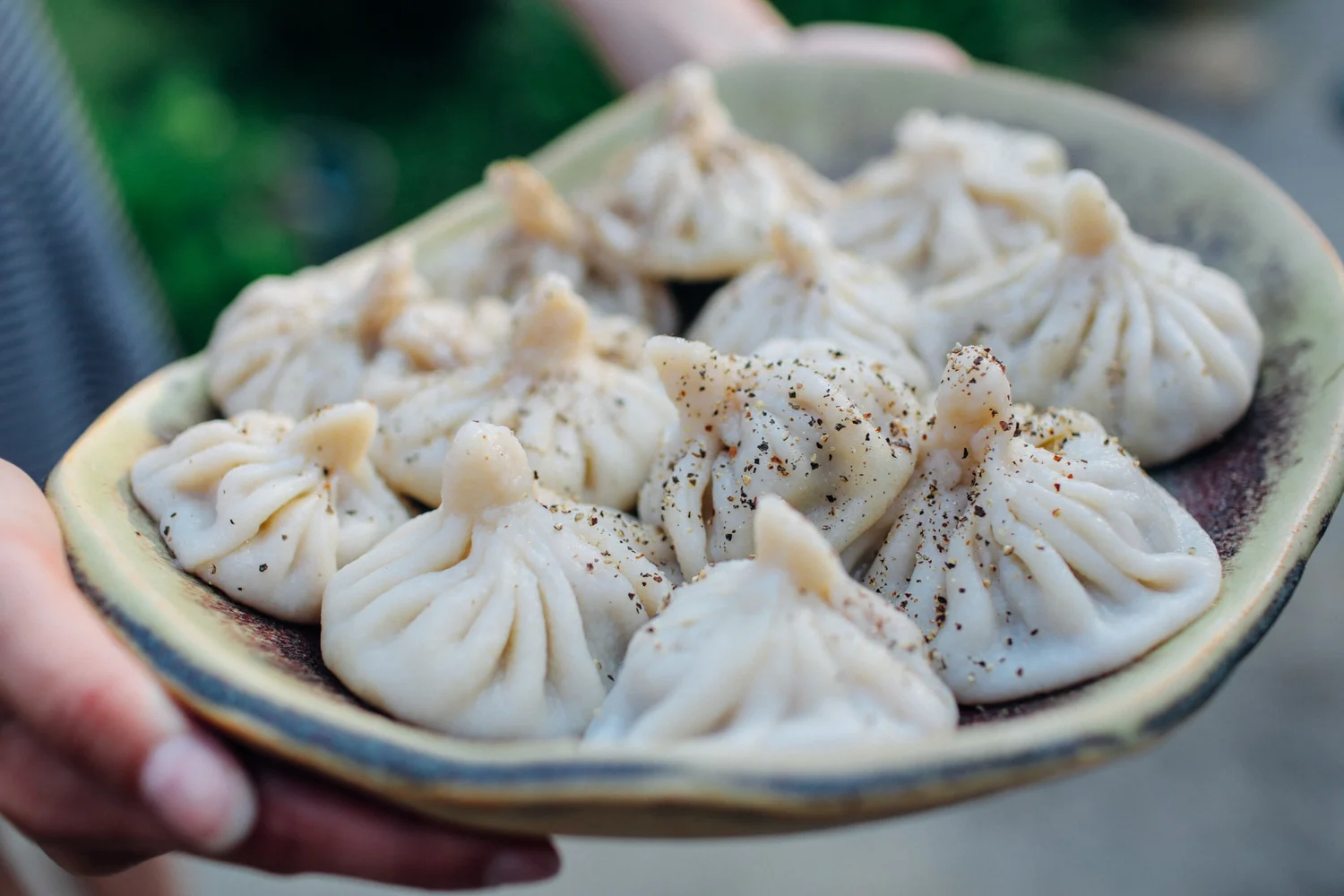
Khinkali Georgian meat-filled soup dumplings with a 19-pleat tradition polinachesnakova.com
Chesnakova's khinkali post opens not with a recipe but with a road. She describes driving the Georgian Military Highway, the epic route through the Caucasus mountains, and stopping in Pasanauri, the village famous for producing Georgia's finest soup dumplings. The post traces the dish from that roadside meal through her family's ongoing attempts to recreate it in Rhode Island, culminating in an afternoon of dumpling-making with her aunt and best friend. Chesnakova walks through every step, from kneading the dough to achieving the magic number of 19 pleats per dumpling, and closes with instructions on how to eat them properly: pick up by the topknot, bite through to release the broth, and never use a fork. It is food writing at its most transporting.
Adjaruli Khachapuri, Georgian Cheese Boat
 Polina C.
Adjaruli Khachapuri The iconic Adjarian cheese boat with egg and butter polinachesnakova.com
Khachapuri is Georgia's most recognized dish abroad, but Chesnakova makes the case that most people encounter it without understanding what it actually is. She wrote a definitive guide for Culture magazine covering the dish's history, regional variations, and cultural significance, including the fact that Georgia has a Khachapuri Index used to gauge inflation. This recipe for the Adjarian version, the boat-shaped bread filled with molten cheese, egg, and butter, is part of a larger collection on her site that also includes Imeruli (stovetop, stuffed with cheese curds) and Penovani (made with puff pastry). Together, they form the most thorough English-language guide to khachapuri available from a home cook.
Why It Matters
Georgian cuisine is in the middle of a breakthrough moment. Restaurant chains are expanding in New York, the Michelin Guide has flagged Georgian food as a major trend, and search interest in dishes like khachapuri and khinkali continues to climb. But almost all of that momentum is restaurant-driven. The home cooking tradition, the one Chesnakova grew up in, remains nearly invisible in English. Her blog and cookbook are among the very few places where a curious home cook can find Georgian recipes written with the depth and personal context that make them worth cooking.
Like Ozoz Sokoh's work at Kitchen Butterfly, Chesnakova is doing something that looks like food blogging but functions as cultural preservation. Every recipe she documents, from her mother's borscht to her aunt's khinkali technique, adds another entry to an archive of a diaspora kitchen that might otherwise exist only in the memories of the women who taught her.
Explore Chesnok: polinachesnakova.com


Sources
- Polina Chesnakova — Meet Polina
- Chesnok: Cooking from My Corner of the Diaspora — Hardie Grant
- Rhode Island Monthly — Chesnok Cookbook
- C-VILLE Weekly — Polina Chesnakova Preserves Culinary Traditions
- Wordloaf — Polina Chesnakova's Chesnok
- Chesnok Substack — About
We're featuring exceptional food blogs that bring unique perspectives to cooking and culture. At ChefTalk, we're building a voice-first cooking companion that transforms any recipe into hands-free, step-by-step guidance. Learn more.